
Guide
Returnable or one-way?
How to tell a returnable cable reel that belongs to its maker from a one-way reel you own: steel, stencils, deposit tags, and where returnables go.
The question that comes first
Before anyone talks about what a reel is worth, there is a simpler question: whose is it? Cable makers ship cable on two kinds of reel. A one-way reel is sold with the cable, belongs to the buyer and is never collected. A returnable reel stays the property of the maker, or is charged for until it comes back, and the maker expects to get it back and fill it again. The holder of a one-way reel can sell it, give it away or recycle it. The holder of a returnable reel should send it back, and doing so usually earns a credit for whoever bought the cable.
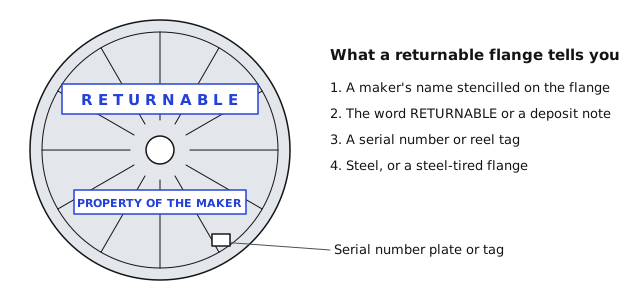
How the makers describe it
Southwire's reel packaging information puts the split plainly: its wooden reels are non-returnable, with no deposit required, and its steel reels are returnable, with charges, and the customer is credited when a reel is returned within 12 months. Other cable makers follow similar patterns, with steel and the largest reels returnable and most wooden reels one-way. Some makers run take-back schemes for wooden reels as well, which is a different thing from a returnable reel: Service Wire, for example, takes back its own-label nailed wood reels in full truckloads, and Sonoco runs a free truckload pickup for viable used wood and polyfiber reels. Those schemes collect one-way reels the maker no longer owns; they do not make the reel returnable.
Signs of a returnable reel
- Steel construction. Welded steel flanges, steel drum, steel tyres. Treat every steel reel as returnable.
- A stencil with return wording. RETURNABLE, RETURN TO, PROPERTY OF, followed by a maker's name.
- A reel number. Painted, stencilled or on a riveted plate. Makers track returnables by number.
- A deposit tag. A metal or plastic tag, or a printed label, mentioning a deposit or a return address.
- Return instructions. A phone number or website for reel collection on the flange.
Signs of a one-way reel
- Wood or plywood, with no stencil or paint beyond a plain shipping label.
- A paper or plastic label giving the cable description, length and weights, stapled to the flange.
- Small size: spools under about 24 inches are nearly always one-way.
- Lagging boards still nailed on, or pulled off and left beside the reel, with nothing else marked.
Grey areas
Some reels sit between the two. A wooden reel with the maker's name printed on it as branding, without any return wording, is usually one-way. A wooden reel with a painted number but no other mark may be returnable. A reel bought second-hand by a contractor and reused may carry an old maker's stencil on a reel that has long since been written off. In each case, a photograph of the marking and a call to the maker or the distributor that sold the cable settles it. We are glad to look at photos and say which way we think it goes, but the maker has the final word.
Why it matters
Selling or scrapping a returnable reel takes value from the company that paid for it, often a contractor who will be billed if the reel does not come back. It can also cause trouble for whoever sold it. Returning one-way reels to a maker that does not want them wastes a phone call. Sorting the two before anything leaves the yard avoids both problems.
What to do with each
- One-way and sound: sell it, give it away, or ask for a pickup. See sell your empty reels.
- One-way and broken: recycle it. See reel recycling.
- Returnable: contact the cable buyer, the distributor or the maker. See manufacturer reel return programs.
- Not sure: photograph both flange faces and any tags, and send them with the request form.
How we handle returnables on a pickup
When we collect from a yard, returnable reels are set aside first and listed by maker and number. They are not loaded, bought or scrapped. The holder gets the list with the contact for each maker. Everything else on the yard is collected as normal, so the yard is cleared of everything except the reels that are going home to their makers.
A walk through a mixed yard
Picture an end-of-season yard behind a utility contractor's shop in Delaware County. Along the fence stand six steel reels, rust-brown, each with a number welded onto a plate: returnable, and the contractor's purchasing department will know which maker each belongs to. Next to them, four big wooden reels with tie rods, two of them stencilled with a maker's name and RETURN TO: returnable too. Then a long row of plain nailed reels, 42 to 60 inches, with weathered paper labels: one-way, and most of them sound. In the corner, a heap of plywood spools and a few split reels that a loader backed into: one-way, some resale and some recycling. Sorting that yard takes an hour with a notebook, and it turns one confusing pile into four clear lists.
After a project closes
Returnable reels are most often lost at the end of a job, when crews move on and the site changes hands. If you are a building owner or a new tenant who has inherited reels, start with the electrical contractor named on the project, then the distributor whose name may appear on the shipping labels. They usually have the purchase records that show who paid the reel charge, and they can arrange collection quickly. Leave the reels where they are until then; moving a heavy reel off a site without the owner's agreement creates more questions than it answers.
Borrowed, not bought
Think of a returnable reel like a borrowed pallet: useful while the cable lasts, then due home.
Reading order for newcomers
Beginners might start with identification, then measuring, then ownership, finishing with value and disposal options.
Questions
Is a reel with a maker's name always returnable?
No. Branding alone is common. Look for return wording, a number or a tag.
What if I have already sold a returnable reel?
Contact the maker or the distributor, explain, and give the reel number if you have it. Most would rather recover the reel than pursue anyone.
Do returnable reels ever become one-way?
A maker can write a reel off and release it. That decision is theirs, and they will say so in writing.
Are plastic spools returnable?
Some larger ones are, when a deposit or return statement is moulded or printed on them. Small plastic spools rarely are.
Last reviewed 2026-11-09.